- Need Free Consultation?

Carbon Capture Conference Takeaways: Why Sequestration Dominates and Where Utilization Still Has Room to Grow
Sequestration Dominates the Carbon Capture Landscape
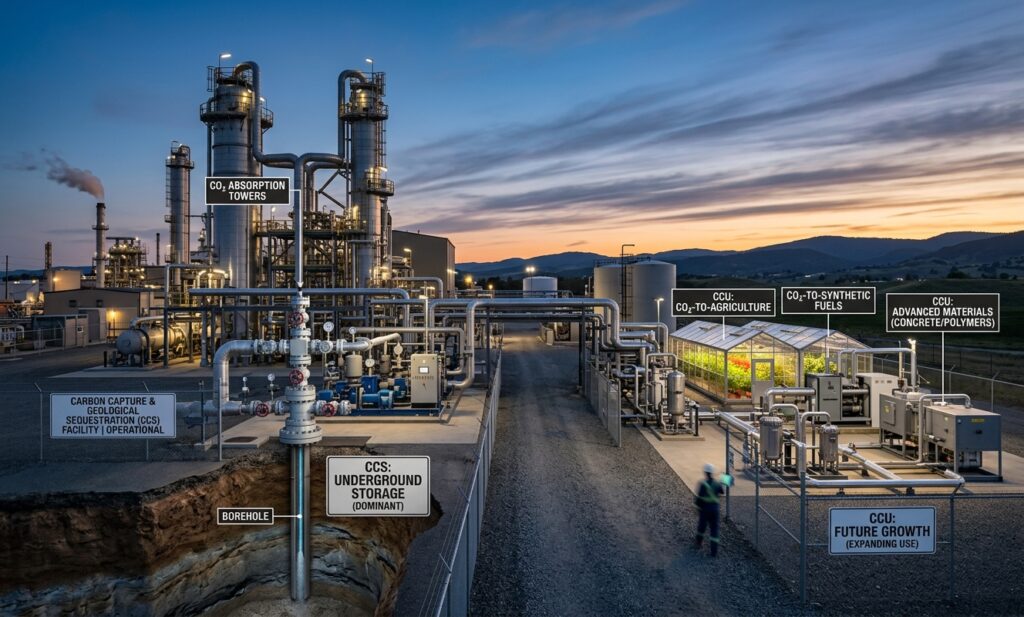
At the recent Carbon Capture Conference at Edmonton, Alberta (September 15 – 17, 2026), it was clear that most companies and projects are focused on capturing carbon dioxide and permanently sequestering it. Far fewer organizations are actively advancing large-scale carbon dioxide utilization pathways.
Why Sequestration Remains the Dominant Solution
This imbalance is understandable when you look at the numbers. Carbon capture projects are already operating, or planned, at scales of millions of tonnes of CO₂ per year. Even when captured carbon dioxide is used for enhanced oil recovery or converted into other materials, the volumes involved still leave a significant surplus that must be managed. As a result, geological sequestration remains the dominant solution for handling the majority of captured CO₂.
The Opportunity for Carbon Dioxide Utilization
That said, the scale of the challenge also points to a meaningful opportunity. Captured carbon dioxide is increasingly available as a concentrated stream. Treating it not only as a waste product that must be stored, but also as a potential raw material, opens the door to new value chains. Converting CO₂ into useful products, whether chemicals, materials, or fuels can create additional revenue streams while reducing the volume that ultimately requires long-term storage.
Technical and Economic Hurdles for Utilization
The technical and economic hurdles for utilization remain real. Many conversion pathways still face challenges related to energy efficiency, catalyst performance, process scale-up, and market demand for the resulting products. However, as capture volumes continue to grow and carbon pricing or incentives evolve, the business case for selective utilization is likely to strengthen. This particularly true for applications where CO₂ can displace more expensive or higher-emission feedstocks.
Bridging the Gap from Laboratory to Commercial Scale
From a scale-up perspective, the gap between laboratory demonstration and commercial deployment in CO₂ utilization remains significant. Bridging that gap will require rigorous process development, careful techno-economic analysis and staged scale-up. These are the areas where technical advisory support can play an important role.
What the Conference Highlighted
The conference reinforced that sequestration will continue to carry the bulk of captured carbon dioxide for the foreseeable future. At the same time, it highlighted that utilization should not be overlooked. For companies developing technologies that can turn CO₂ into valuable products, the opportunity to contribute meaningful solutions and build viable businesses is still very much open.
Scale-Up Electrochemical Inc.'s Perspective
At Scale-Up Electrochemical Inc., we are interested in the technical pathways that can help move promising CO₂ utilization processes from pilot toward commercial scale.